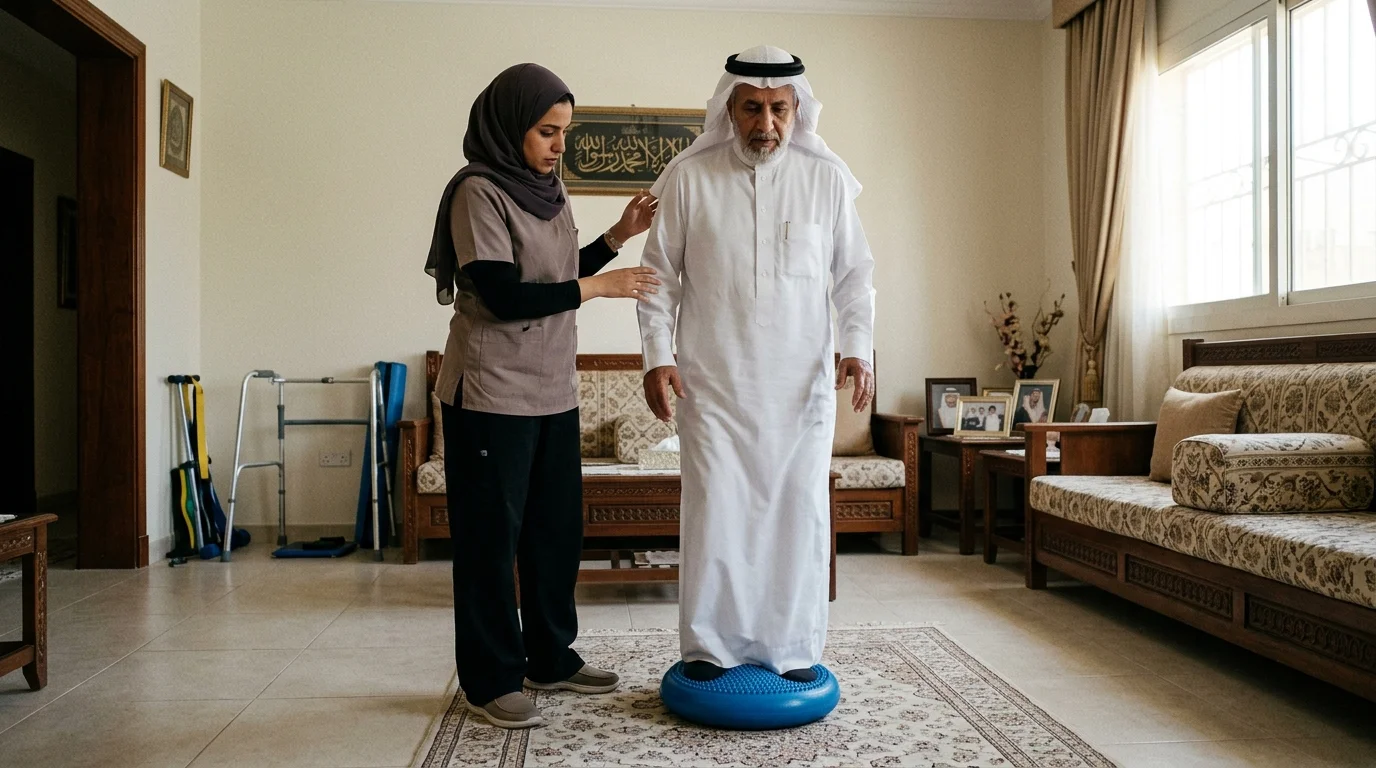
Neurophysiology of Human Balance: The Multisensory Triad
Human equilibrium is not a single reflex; it is a sophisticated central integration process executed by the brainstem, cerebellum, and cerebral cortex, synthesized from three continuous sensory streams known as the 'Sensory Triad of Balance':
1. Somatosensory / Proprioceptive System: Millions of mechanoreceptors located in ankle joints, plantar soles, and paraspinal muscles transmitting real-time spatial data regarding surface compliance and joint angles.
2. Vestibular System: Semicircular canals and otolith organs in the inner ear registering angular head acceleration and linear gravitational orientation.
3. Visual System: Gauging spatial orientation, horizon leveling, and relative distance to environmental objects.
When an ischemic stroke, Parkinson's disease, diabetic neuropathy, or spinal cord trauma interrupts these sensory conduits or damages central processing, equilibrium falters. Patients experience debilitating dizziness, postural sway, and an overwhelming 'fear of falling' (ptophobia) that drives physical inactivity, muscle atrophy, and recurrent domestic trauma.